
Magic Mushroom Education
Magic Mushroom Animal Research Canada: What Fish Studies Can—and Cannot—Tell Us
Oct
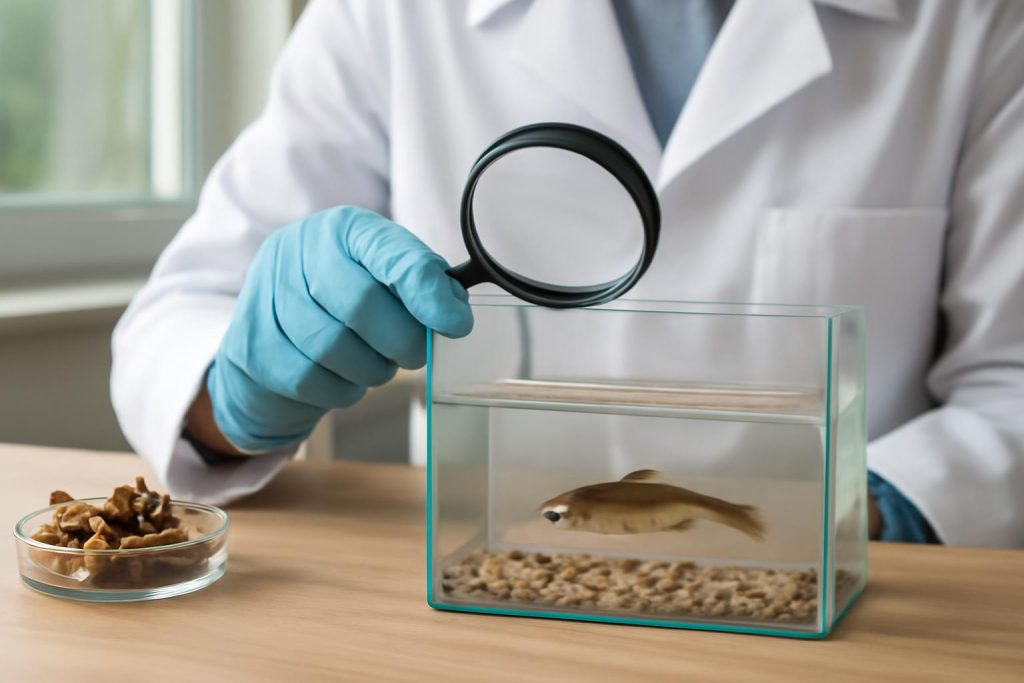
A recent science headline reports that an ingredient from magic mushrooms may reduce aggressive behaviour in fish. The finding is interesting, but it also creates a familiar problem: animal research can be simplified quickly into claims about human mood, personality, or mental health.
For Canadians searching for magic mushroom animal research Canada, the most useful approach is to separate three things: what the study actually tested, what the results might suggest for future research, and what remains unknown about people. A fish study is not proof that psilocybin makes humans calmer, less aggressive, or safer. It is one small piece of a much larger scientific process.
This guide explains how to read that kind of headline, why researchers use animals, how psilocybin differs across species, and what practical safety lessons apply to anyone learning about magic mushrooms in Canada.
What the fish-study headline may tell us
The reported research appears to examine whether a compound associated with magic mushrooms changes aggressive behaviour in fish. In behavioural science, aggression is usually measured through observable actions rather than personal feelings. Depending on the species and experiment, researchers may record territorial displays, chasing, biting, threat postures, or responses to another animal.
That distinction matters. If a fish shows fewer aggressive behaviours after exposure to a compound, researchers can cautiously say that the compound affected measured behaviour under those conditions. They cannot automatically conclude that the fish experienced empathy, emotional insight, or a human-like change in temperament.
Animal experiments are often designed to isolate a biological question. Researchers may control the dose, timing, environment, social interaction, and food intake. Those controls can make a result easier to study, but they also make the experiment different from real-world use by a person.
Why researchers study behaviour in animals
Animal models can help scientists investigate biological pathways before beginning more complex human research. They may reveal whether a compound interacts with particular receptors, changes stress responses, or affects social behaviour. They can also help researchers identify possible adverse effects and decide whether a question is worth studying further.
Fish are used in some areas of neuroscience because they are relatively practical to observe, reproduce quickly, and can display measurable social and stress-related behaviours. Their nervous systems are not identical to those of mammals, however, and they do not provide a complete model of the human brain.
In other words, a fish study can be useful without being directly predictive. It is best viewed as an early clue, not a finished answer.
What the study does not prove about magic mushrooms
One of the most important skills in understanding psilocybin research Canada is recognizing the difference between an association, a laboratory effect, and a demonstrated treatment benefit.
A result in fish does not establish that:
- magic mushrooms reduce aggression in humans;
- psilocybin can treat anger, violence, anxiety, depression, or trauma;
- the compound is safe for unsupervised use;
- the same dose produces the same effect in people;
- all mushroom species or products contain comparable amounts of active compounds;
- the result applies to every age group, health condition, or medication combination.
It is also important to distinguish a purified ingredient from a whole mushroom. A controlled study may use a measured compound, while dried mushrooms contain variable concentrations and several naturally occurring substances. The preparation, potency, storage conditions, and individual response can all affect the experience.
Why animal findings do not translate directly to humans
Different brains and different behaviours
Psilocybin is converted in the body into psilocin, which interacts with serotonin systems. Serotonin signalling exists across many species, but receptor distribution, metabolism, brain structure, and behaviour differ considerably. A compound can produce one observable effect in fish and a different effect in mammals or humans.
Human aggression is also complex. It can be influenced by stress, sleep, alcohol or other drugs, trauma, social circumstances, personality, mental health conditions, and immediate surroundings. A controlled fish behaviour test cannot capture that full combination.
Different doses and routes of exposure
Animal studies often calculate exposure according to body weight and use carefully controlled administration. Those calculations cannot be converted casually into a human serving recommendation. Metabolism is not a simple mathematical scale, and a dose that appears small in one species may not have the same biological meaning in another.
This is one reason responsible magic mushroom education in Canada should avoid translating experimental doses into instructions for personal use. Research protocols are designed for scientific measurement, not for recreational decision-making.
Laboratory conditions are not everyday life
Animals in a study may be observed in a small, controlled environment with limited variables. People use psychoactive substances in environments that can involve driving, work, relationships, stress, music, crowds, alcohol, cannabis, prescription medicines, or other drugs.
The surrounding conditions can strongly influence the experience. A study that measures one behaviour under one set of conditions cannot predict every possible response outside the laboratory.
How to evaluate a magic mushroom research headline
When a new headline appears, ask a few basic questions before accepting its conclusion.
1. What substance was actually tested?
Was the experiment conducted with psilocybin, psilocin, another mushroom compound, or a synthetic chemical inspired by fungal biology? “Magic mushroom ingredient” is a broad media phrase. The exact compound matters because different substances can have different effects and risks.
2. What species was studied?
Was it fish, mice, rats, insects, or another animal? A result in one species cannot automatically be generalized to another. Look for the specific species and the behaviour measured.
3. Was there a control group?
A comparison group helps researchers determine whether a change is associated with the tested compound rather than handling, environment, food, stress, or chance. Studies with appropriate controls generally provide stronger evidence than simple before-and-after observations.
4. Was the result replicated?
One experiment can be affected by sample size, measurement choices, or unusual conditions. Replication by independent researchers makes a finding more credible. A single study should rarely be used to support a broad claim about psychedelic mushrooms Canada or human health.
5. What did the researchers actually conclude?
Scientific papers usually use cautious language such as “may,” “is associated with,” or “supports further investigation.” Headlines may use stronger wording to attract attention. Reading beyond the headline can reveal important limitations, including a small sample, short observation period, or lack of human data.
What this means for psilocybin safety in Canada
Animal research can eventually contribute to safety knowledge, but it does not remove the need for caution. Psilocybin can alter perception, mood, attention, coordination, and the sense of time. Some people report challenging experiences, including panic, confusion, paranoia, nausea, or intense emotional distress.
Risk may be higher for people with a personal or family history of psychosis or mania, certain serious mental-health conditions, uncontrolled cardiovascular problems, or medication combinations that affect the brain or heart. Anyone with a medical condition or prescription medication should speak with a qualified healthcare professional rather than relying on an online claim.
Never drive, cycle in traffic, swim, climb, use machinery, or make important decisions while impaired. Combining psilocybin with alcohol, cannabis, stimulants, sedatives, or other psychoactive substances can make effects less predictable. A calm environment, trusted sober support, and an emergency plan are basic harm-reduction considerations—but they do not make an illegal or unregulated product risk-free.
It is also essential not to identify wild mushrooms by appearance alone. Misidentification can lead to severe poisoning. Unregulated products may be inaccurately labelled, contaminated, or significantly different in potency from what a person expects.
Animal research and the Canadian legal context
Interest in psilocybin research does not change the legal status of possession, production, sale, or distribution. Canadian rules can also differ from public assumptions about decriminalization, clinical trials, exemptions, and access to treatment. A news report about a laboratory experiment is not legal permission to possess or use a substance.
People looking for magic mushrooms Ontario, magic mushrooms Toronto, magic mushrooms Vancouver, or information about British Columbia, Alberta, Quebec, Manitoba, Saskatchewan, Nova Scotia, New Brunswick, Newfoundland and Labrador, or other provinces should verify current information through official Canadian channels. Local discussion and media coverage are not substitutes for current legal guidance.
For broader product-category context, readers can also review the site’s category index, while remembering that an online listing does not verify legality, laboratory testing, potency, or medical suitability.
Where this line of research could lead
If early animal findings are robust, researchers may investigate the underlying mechanism in more detail. Future work could examine serotonin receptors, stress hormones, social interaction, inflammation, or neural circuits linked to defensive behaviour. Researchers may also compare different compounds and determine whether behavioural changes persist after the substance leaves the body.
The next stages would normally require careful replication, additional animal models where appropriate, toxicology work, and eventually ethically approved human research. Human studies would need to measure outcomes clearly and account for expectancy, prior psychedelic experience, mental-health history, dose, setting, and follow-up period.
Even if a human trial eventually finds a therapeutic effect, that would not mean that unsupervised mushroom use produces the same result. Clinical research typically includes screening, preparation, monitoring, trained staff, standardized material, and follow-up support.
Frequently asked questions
Does a fish study prove that psilocybin reduces aggression in people?
No. It may identify a behavioural effect worth investigating, but fish and humans differ in brain biology, metabolism, psychology, and social behaviour. Human research is needed before making claims about aggression or treatment.
Are all magic mushrooms the same as the compound used in a study?
No. A study may use purified psilocybin or another specific molecule. Whole mushrooms can vary by species, genetics, growing conditions, preparation, and storage. A headline about one compound should not be treated as evidence about every mushroom product.
Can animal research show whether magic mushrooms are safe?
It can provide early information about possible effects and risks, but it cannot establish complete human safety. Safety assessment requires multiple types of evidence, including carefully designed human studies and clinical monitoring.
Does promising research mean people should self-treat?
No. Early findings are not medical advice. Self-treatment can delay appropriate care and may create additional risks, especially for people taking medication or living with a mental-health or cardiovascular condition.
Where can Canadians find more educational information?
Start with transparent scientific reporting, current Canadian public-health information, and qualified healthcare professionals. The site’s post index may help readers locate related educational articles, but online content should complement—not replace—professional advice.
The practical takeaway
The reported fish finding is a reason to follow the research, not a reason to jump to conclusions. A careful reader asks what compound was tested, which species was studied, how behaviour was measured, whether the result was replicated, and what limitations the researchers identified.
For anyone exploring magic mushroom information in Canada, the central lesson is simple: early animal evidence can open a scientific question, but it cannot answer a human health question by itself. Treat promising headlines as preliminary, keep legal and safety considerations separate from scientific interest, and wait for strong, transparent human evidence before drawing practical conclusions.
